10550 N La Cañada Dr #106, Oro Valley, AZ 85737
Losing a front tooth can feel overwhelming. Unlike a missing tooth in the back of your mouth, a gap in the front is immediately visible whenever you smile, speak, or laugh. Beyond aesthetics, a missing front tooth can affect your confidence, speech, bite alignment, and overall oral health.
Fortunately, modern dentistry offers highly effective solutions for replacing a missing front tooth. Two of the most common options are dental bridges and dental implants. While both treatments can restore your smile, they work differently and offer unique advantages.
At Studio Dental in Oro Valley, AZ, Dr. Athena Storey helps patients understand their tooth replacement options so they can make informed decisions about their oral health. If you’re wondering whether a bridge or dental implant is right for you, this guide will help you understand the differences.
Why Replacing a Missing Front Tooth Matters
Many people initially focus on the cosmetic impact of losing a front tooth. While appearance is certainly important, the consequences extend beyond aesthetics.
When a tooth is missing, neighboring teeth may begin shifting into the empty space. Over time, this movement can affect your bite and create alignment issues. The jawbone beneath the missing tooth may also begin to deteriorate due to a lack of stimulation.
A missing front tooth can additionally affect:
- Speech clarity
- Chewing efficiency
- Facial appearance
- Self-confidence
- Long-term oral health
The sooner a missing tooth is replaced, the better the chances of preventing future complications.
If you’ve recently lost a front tooth, schedule an appointment today with your dentist to discuss your replacement options before additional issues develop.
Understanding Dental Bridges
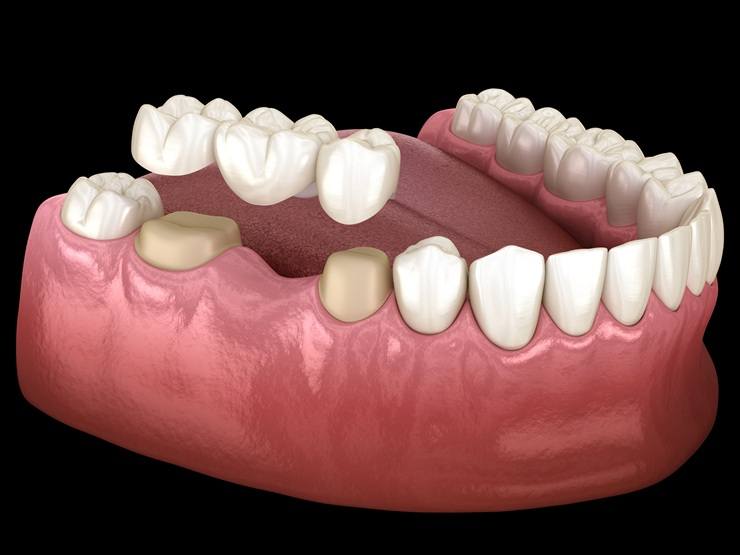
A dental bridge is a fixed restoration designed to replace one or more missing teeth. The bridge literally “bridges” the gap left by the missing tooth.
A traditional bridge typically consists of:
- One artificial replacement tooth (pontic)
- Two dental crowns attached to neighboring teeth
The adjacent teeth are prepared to support the dental bridge, allowing the restoration to remain securely in place.
Dental bridges have been used successfully for many years and continue to be a reliable solution for many patients.
How a Dental Bridge Replaces a Front Tooth
When replacing a front tooth with a bridge, the artificial tooth is carefully designed to blend with the surrounding teeth in shape, size, and color.
The supporting teeth on either side of the gap serve as anchors for the restoration. Once the bridge is permanently placed, the missing tooth space is filled, creating a natural-looking smile.
Many patients appreciate that bridges can often be completed relatively quickly compared to other restorative treatments.
Benefits of Choosing a Dental Bridge
For some patients, a bridge may be the ideal solution.
Faster Treatment Timeline
Dental bridges generally require fewer appointments than dental implants and can often be completed within a matter of weeks.
No Surgical Procedure Required
Unlike implants, bridges do not require surgical placement into the jawbone. This may appeal to patients seeking a less invasive treatment option.
Restored Appearance and Function
A bridge can effectively restore your smile’s appearance while helping improve chewing and speaking abilities.
Proven Treatment Option
Dental bridges have a long history of successful use and remain a trusted restorative solution.
However, while bridges offer many advantages, they are not always the best option for every patient.
Understanding Dental Implants
Dental implants are widely considered one of the most advanced tooth replacement options available today.
Unlike bridges, dental implants replace both the visible tooth and its root structure.
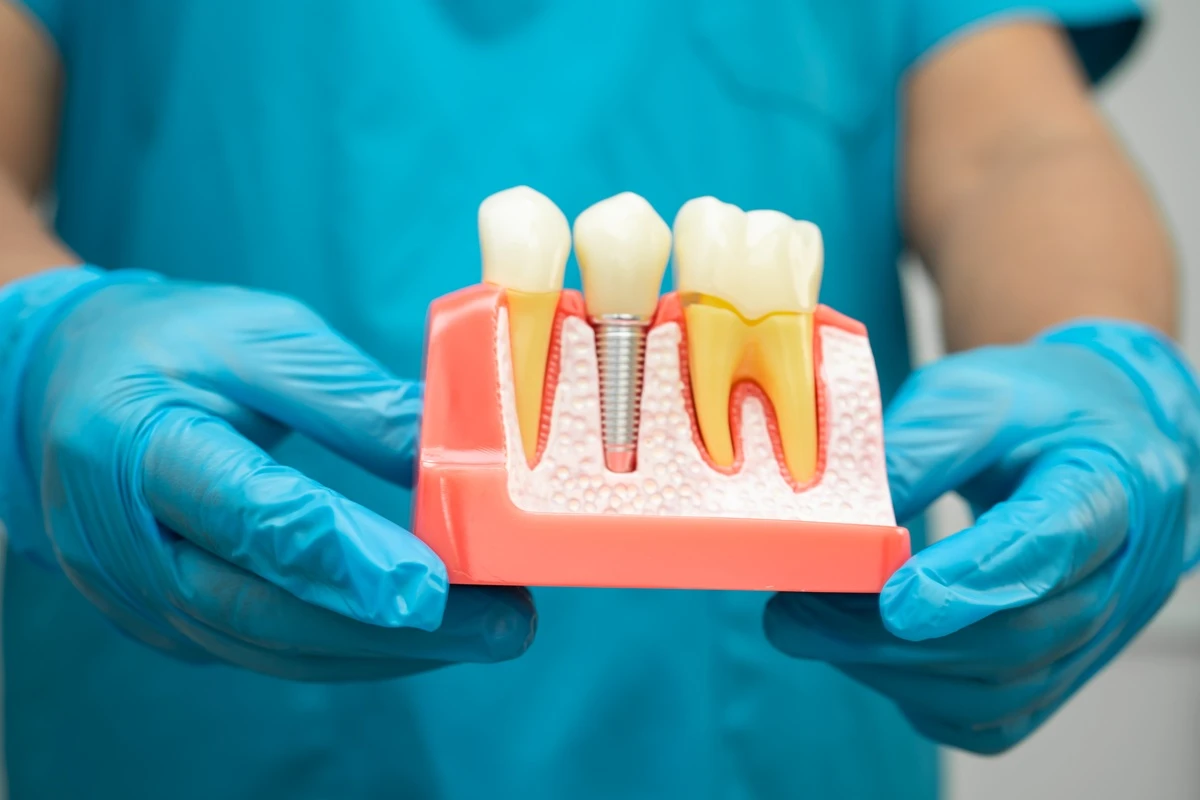
A dental implant consists of three primary components:
- Titanium implant post
- Connector piece (abutment)
- Custom dental crown
The implant post is surgically placed into the jawbone, where it functions like an artificial tooth root.
Once healing is complete, a custom-made crown is attached to create a natural-looking replacement tooth.
How Dental Implants Replace a Missing Front Tooth
One reason implants are particularly popular for front tooth replacement is their ability to closely mimic natural teeth.
Because the implant is anchored directly into the jawbone, it provides excellent stability and support. The crown attached to the implant is custom-crafted to match your surrounding teeth, helping create a seamless appearance.
Most people cannot tell the difference between a properly restored dental implant and a natural tooth.
Benefits of Choosing a Dental Implant
Dental implants offer several unique advantages that make them an attractive option for many patients.
Preserves Jawbone Health
One of the most significant benefits of implants is their ability to stimulate the jawbone.
When a natural tooth root is lost, the surrounding bone may begin to shrink over time. Dental implants help maintain bone volume by providing the stimulation the jawbone needs.
Does Not Affect Adjacent Teeth
Unlike a bridge, an implant does not require modification of neighboring healthy teeth.
This allows surrounding teeth to remain intact and untouched.
Exceptional Stability
Because implants become integrated with the jawbone, they provide remarkable strength and stability during daily activities such as chewing and speaking.
Long-Term Durability
With proper care and maintenance, dental implants can often last for many years and may even provide a lifelong solution for some patients.
Bridge vs. Implant: Which Option Looks More Natural?
When replacing a front tooth, appearance is often one of the biggest concerns.
Both bridges and implants can produce highly attractive results. However, implants often provide the most natural appearance because they emerge directly from the gumline, similar to a natural tooth.
Additionally, because implants help preserve jawbone structure, they may better maintain the natural contours of the gums and facial tissues over time.
For patients seeking the closest possible replacement to a natural tooth, implants are frequently considered the gold standard.
Factors That Influence the Best Choice
Choosing between a bridge and an implant depends on several individual factors.
Oral Health Condition
Healthy gums and adequate bone support are important considerations when evaluating implant candidacy.
Number of Missing Teeth
The location and number of missing teeth can influence which treatment is most appropriate.
Treatment Timeline
Patients seeking a quicker restoration may prefer a bridge, while those focused on long-term benefits may lean toward implants.
Budget Considerations
Initial costs can vary between treatments. While implants often require a greater upfront investment, many patients view them as a valuable long-term solution.
Personal Preferences
Some patients prefer to avoid surgery, while others prioritize preserving surrounding teeth and maintaining bone health.
A comprehensive consultation allows your dentist to evaluate these factors and provide personalized recommendations.
Can You Wait to Replace a Missing Front Tooth?
While it may be tempting to delay treatment, waiting can make restoration more challenging.
The longer a tooth remains missing, the greater the likelihood of:
- Bone loss
- Tooth shifting
- Bite changes
- Additional dental complications
Early treatment often helps preserve your oral structures and expands your restorative options.
If you have a missing front tooth, schedule an appointment today with your dentist to explore solutions before further changes occur.
Restore Your Smile with Confidence at Studio Dental
A missing front tooth can impact far more than your appearance. It can affect your confidence, oral function, and long-term dental health. Fortunately, both dental bridges and dental implants offer effective ways to restore your smile.
At Studio Dental in Oro Valley, AZ, Dr. Athena Storey works closely with patients to determine the most appropriate tooth replacement solution based on their individual needs, goals, and oral health condition. Whether you’re considering a bridge, an implant, or another restorative option, you’ll receive personalized care designed to help you smile confidently again.
Don’t let a missing front tooth affect your quality of life. Schedule an appointment today with Dr. Athena Storey at Studio Dental and discover which treatment option may be right for you.
FAQs About Bridge vs. Dental Implant
Is a dental implant better than a bridge for a missing front tooth?
Both options can be effective. Dental implants often provide superior bone preservation and do not require altering adjacent teeth, while bridges may offer a faster treatment timeline.
How long does it take to replace a front tooth with an implant?
The process can take several months because the implant must heal and integrate with the jawbone before the final crown is placed.
Can a dental bridge look natural in the front of the mouth?
Yes. Modern dental bridges are custom-designed to match the size, shape, and color of surrounding teeth for a natural appearance.
Will replacing a missing front tooth improve my speech?
In many cases, yes. Replacing a missing front tooth can help restore proper pronunciation and improve speech clarity.