10550 N La Cañada Dr #106, Oro Valley, AZ 85737

Most people brush their teeth every day. Yet millions still develop gum disease. Understanding why bacteria below your gumline leads to disease; and across the country — helps explain why home care alone is never enough. At Studio Dental, Dr. Athena Storey helps patients break the cycle before it becomes a serious problem.
What Lives Below Your Gumline
Your mouth contains hundreds of bacterial species. Most are harmless or even helpful. But certain bacteria thrive in the warm, dark space between your teeth and gums.
This pocket is called the sulcus. It sits just below the visible gumline. When bacteria colonize this space, they form a sticky film called plaque. Plaque hardens into tartar within 24 to 72 hours.
Tartar cannot be removed by brushing or flossing. It bonds tightly to tooth surfaces and provides a scaffold for more bacteria. Once tartar forms below the gumline, the bacterial population grows rapidly.
These bacteria release toxins as a byproduct of their activity. Those toxins irritate gum tissue and trigger an immune response. That immune response — not the bacteria alone — causes much of the damage associated with gum disease.
How Bacteria Below Your Gumline Leads to Gum Disease
Gum disease progresses in stages. The first stage is gingivitis. At this point, gums look red and may bleed when you floss. Many people dismiss this as normal. It is not.
Untreated gingivitis advances to periodontitis. The infection moves deeper into the tissue. It attacks the bone and ligaments that hold your teeth in place. This stage causes real, lasting damage.
- Gum tissue pulls away from teeth, forming deeper pockets
- Bone loss begins around the roots of affected teeth
- Teeth may become loose or shift position over time
- Chronic inflammation spreads and affects overall health
- Tooth loss becomes a serious risk without treatment
Research also links periodontal disease to cardiovascular disease, diabetes complications, and premature birth. The bacteria that live below your gumline do not stay local. They enter the bloodstream through inflamed gum tissue.
For patients in Oro Valley, the dry desert climate can contribute to dry mouth. Reduced saliva means less natural bacterial rinsing. This makes routine professional dental care even more important in this region.
Why Brushing and Flossing Are Not Enough
Daily home care is essential. It removes surface plaque from teeth and from just above the gumline. But it cannot reach the bacteria already living in the sulcus.
Flossing disrupts plaque between teeth. It helps prevent buildup at the gumline. However, floss cannot reach several millimeters below the gumline where periodontitis develops.
Even perfect home care leaves a gap. Bacteria in the sulcus accumulate undisturbed between professional visits. This is not a failure of brushing technique. It is simply a limitation of what any toothbrush or floss can physically reach.
That is where professional cleanings play a critical role. Dental hygienists use specialized instruments to scale below the gumline. They disrupt bacterial colonies and remove tartar that home care cannot address.
How Professional Cleanings Interrupt the Disease Cycle
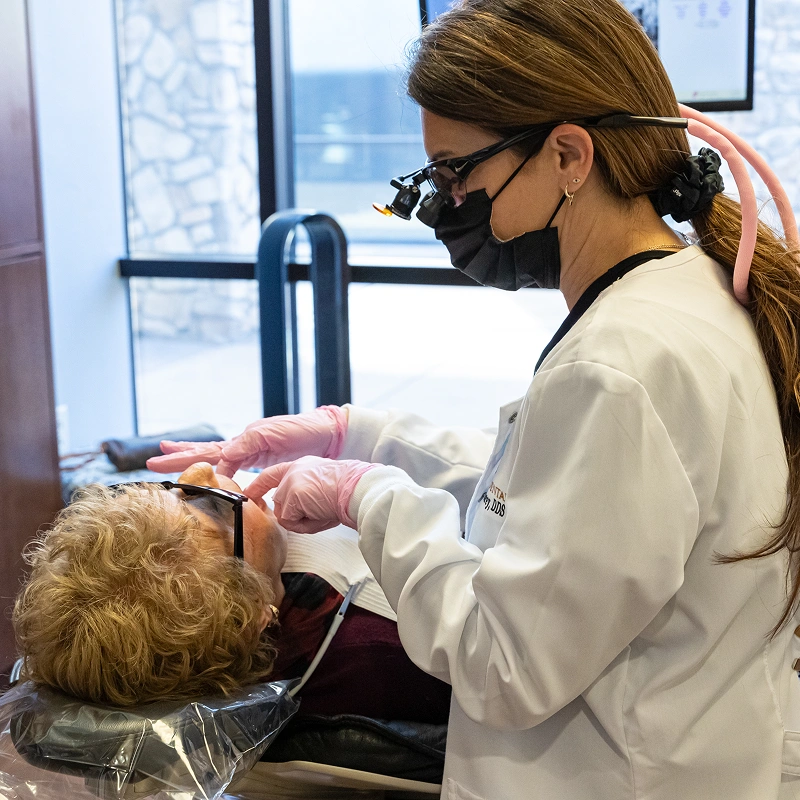
A professional cleaning — also called prophylaxis — targets both surfaces above and below the gumline. Your hygienist uses ultrasonic scalers and hand instruments to remove tartar from root surfaces.
This process disrupts the bacterial biofilm that drives inflammation. When that biofilm is removed, the immune response calms. Gum tissue begins to heal and reattach more firmly.
- Scaling removes hardened tartar from root surfaces
- Polishing smooths tooth surfaces to slow future plaque buildup
- Fluoride treatment strengthens enamel and root surfaces
- Pocket depth measurements track gum health over time
- Early disease detection prevents progression to advanced stages
For patients with early-stage gum disease, more frequent cleanings may be recommended. A schedule of every three to four months — rather than every six — can make a significant difference in disease control.
Dr. Storey and her team at Studio Dental tailor each cleaning plan to the individual patient. Some patients need more intensive care. Others maintain excellent health with twice-yearly visits. The right schedule depends on your specific bacterial environment and gum pocket depths.
Protecting Your Whole Family in Oro Valley
Gum disease is not just an adult problem. Children and teenagers can develop gingivitis too. Hormonal changes during puberty increase gum sensitivity. Early habits make a lifelong difference.
Families in Oro Valley benefit from seeing a practice that understands all age groups. Family Dentistry services at Studio Dental mean every member of your household receives age-appropriate gum care under one roof.
Teaching children about the bacteria below the gumline helps them understand why professional cleanings matter. They build habits early. Those habits carry into adulthood and reduce lifetime disease risk.
Parents often notice their own gum health improves when the whole family attends regular appointments together. Accountability and routine make a real difference.
When Gum Problems Become Urgent
Sometimes gum infections escalate quickly. A periodontal abscess can develop when bacteria become trapped in a deep pocket. This causes significant pain and swelling. It requires prompt treatment.
If you experience sudden severe gum pain, bleeding that won’t stop, or noticeable swelling around a tooth, do not wait for your next scheduled visit. emergency dental care in Tortolita are available at Studio Dental for exactly these situations.
Prompt care prevents a localized infection from spreading. It also reduces the amount of tissue damage that occurs during an acute episode.
Making Gum Health a Priority in Your Routine
Gum health is the foundation of your entire oral health. Teeth depend on healthy bone and tissue for support. When that foundation is compromised, everything else becomes more complicated.
Residents of Tortolita have access to expert care right in their community. Dr. Athena Storey brings a patient-centered approach to every appointment. Her team explains what they find, why it matters, and what steps will address it.
You do not need to wait until something hurts to take action. The best time to address bacteria below the gumline is before symptoms appear. Regular cleanings and consistent home care create a cycle of health rather than a cycle of disease.
Your gums support your teeth, your smile, and your overall wellbeing. Give them the professional attention they deserve. Contact us to schedule your appointment with our team.
Frequently Asked Questions
Q 1. How do I know if I have bacteria below my gumline causing damage?
A: Many people have no obvious symptoms in the early stages. Bleeding gums during brushing or flossing is the most common early sign. Red, puffy, or tender gum tissue also suggests bacterial activity below the gumline. A professional exam and pocket depth measurements will reveal what is happening beneath the surface.
Q 2. How often should I get a professional cleaning to prevent gum disease?
A: Most patients benefit from cleanings every six months. However, patients with a history of gum disease or deeper pockets often need cleanings every three to four months. Dr. Storey evaluates each patient individually and recommends a cleaning schedule based on your specific gum health.
Q 3. Can gum disease be reversed with professional cleanings alone?
A: Gingivitis — the earliest stage — can be fully reversed with professional cleanings combined with improved home care. Advanced periodontitis causes bone loss that cannot be fully reversed, but it can be managed and stabilized. Early intervention produces the best outcomes, which is why regular cleanings are so important.
Q 4. Is gum disease really connected to other health conditions?
A: Yes. Research consistently links periodontal disease to systemic health issues including heart disease, type 2 diabetes, respiratory conditions, and complications during pregnancy. The bacteria and inflammatory chemicals from infected gum tissue enter the bloodstream and affect other organs and systems throughout the body.
Q 5. What happens during a deep cleaning versus a regular cleaning?
A: A regular cleaning addresses plaque and tartar above and just below the gumline. A deep cleaning — called scaling and root planing — focuses specifically on removing tartar from deeper root surfaces and smoothing the root to discourage bacterial reattachment. Deep cleanings are typically performed when pocket depths exceed a healthy range.